
Are Flying Cars Are New Love for Car Lovers : New Era of Car Love Start
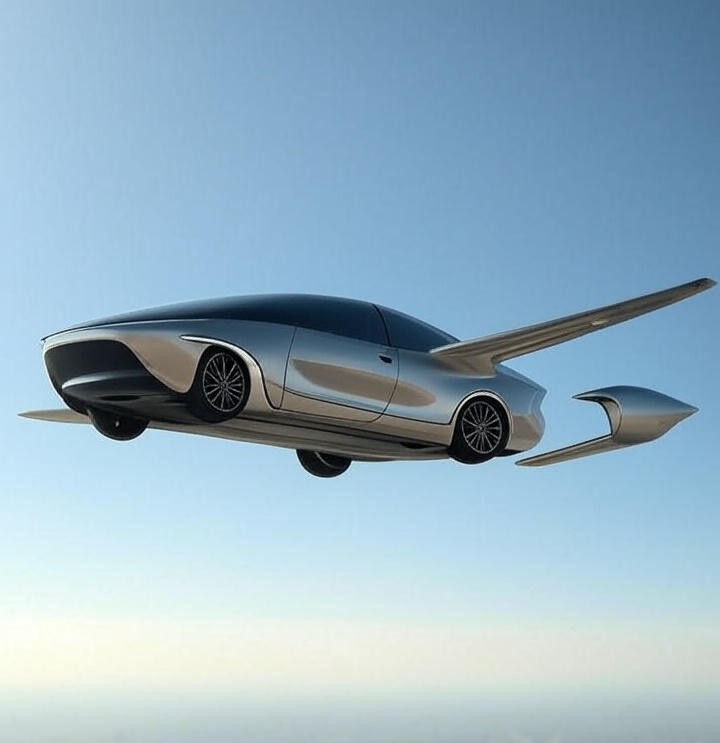
Table of Contents
ToggleINTRODUCTION
Overview
As the ultimate form of transportation in the future, flying cars have been a common feature of science fiction for many years. From “The Jetsons” to “Back to the Future,” the concept of personal aerial vehicles has captivated the interest of millions of people. However, what appeared to be a far-off dream is now getting closer to reality. Electric vertical takeoff and landing (eVTOL) vehicles, also known as flying cars, are poised to transform the way we commute thanks to developments in electric propulsion, autonomous systems, and urban air mobility (UAM).
Topics Covered
1. The origins of flying automobiles
2. Recent advancements in eVTOL technology
3. Important figures in the sector
4. Infrastructure and regulatory issues
5. The possible effects on society
6. What lies ahead
A Berief history of flying cars
Flying cars are not a novel idea. Actually, there have been attempts to construct them since the early 1900s.
Early Attempts: The Curtiss Autoplane, which was built in 1917 and is frequently regarded as the first flying automobile, had wings that could be detached but was never able to fly continuously.
Only a small number of the Fulton Airphibian, a roadable aircraft that could be converted into a car, were produced in 1946.
1950s: Aerocar: One of the most well-known early designs, the Aerocar could change from a car to an airplane in a matter of minutes. It never went into mass production, even though its test flights were successful.
Current Advancements
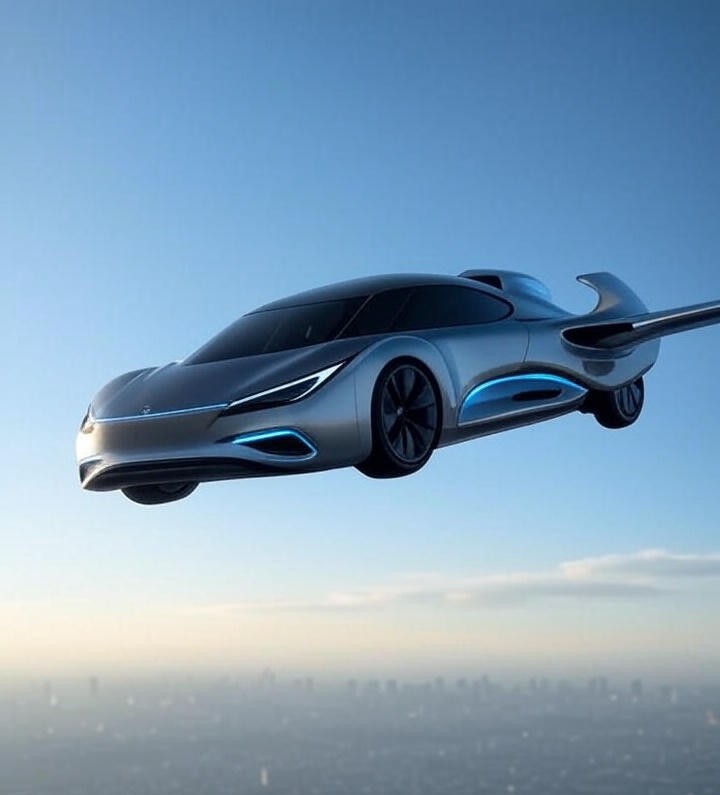
Thanks to developments in battery technology, lightweight materials, and autonomous flight systems, flying car projects have increased dramatically in the twenty-first century. Today’s flying cars, in contrast to previous models, are mostly eVTOLs—electric vehicles that take off and land vertically, eliminating the need for runways.
How Do Flying Cars Work?
Electric motors provide the vertical lift and forward propulsion for the majority of contemporary flying cars, or eVTOLs. They are made possible by key technologies such as:
1. Electric Motors
more effective and quieter than combustion engines.
lower carbon footprint when compared to conventional airplanes.
2. Electric propulsion that is distributed (DEP)
Several tiny rotors increase redundancy and safety.
3. Systems for Autonomous Flight
Pilot expertise is less necessary with AI-powered navigation.
4. Materials That Are Lightweight
Advanced composites and carbon fiber reduce weight.
5. Technology of Batteries
For greater range, high-energy-density batteries are essential.
Current State of Flying Car Technology
Prototypes of the flying cars being developed by a number of companies are currently being tested. The following are a few of the most exciting projects:
1. Terrafugia, a Geely subsidiary
Transition: A roadworthy aircraft with the ability to switch between flying and driving modes.
TF-2: A cutting-edge eVTOL intended for air travel in cities.
2. The Netherlands’ PAL-V
Liberty: A flying car in the style of a gyrocopter that can travel on roads but needs a short runway for takeoff.
3. Slovakia’s AeroMobil
The sleek, hybrid-electric AeroMobil 5.0 is a vehicle that can be driven on the road or in the air.
4. Joby Aviation Joby S4: An all-electric eVTOL capable of reaching 200 mph and a 150-mile range.
5. China’s EHang
For quick city commutes, the EHang 216 is an autonomous air taxi.
6. Germany’s Lilium
Lilium Jet: 36 electric jet engines power this five-seater eVTOL, which has a range of 155 miles.
7. Archer Aviation Midnight: A short-distance, back-to-back eVTOL air taxi.
8. Boeing and Porsche Cooperation
creating a high-end flying car concept for city transportation.
With some aiming for certification and deployment by 2025–2030, these companies are vying for the first commercially viable flying cars.
Challenges Facing Flying Cars
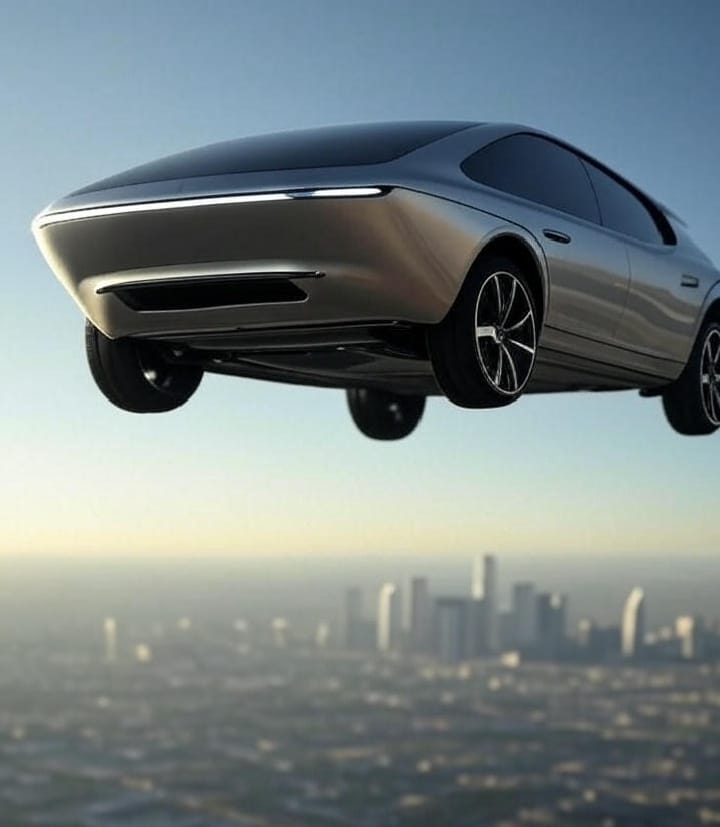
Even with the quick advancements, a number of obstacles still need to be overcome before flying cars are widely used.
1. Certification frameworks for eVTOLs are still being developed by regulatory approval aviation authorities (FAA, EASA).
In order to control urban air mobility, air traffic control systems need to change.
2. Infrastructure Vertiports: Landing pads and charging stations are essential for cities.
Air Corridors: To avoid collisions, specific flight routes must be set up.
3. Safety Issues
Major risks include system failures, mid-air collisions, and battery fires.
Failure-safe procedures and redundancy are essential.
4. Pollution from noise
Even though eVTOLs are less noisy than helicopters, noise pollution in cities is still an issue.
5. Expensive
Early adoption will probably be restricted to luxury and commercial markets due to the high cost of the initial models.
6. Acceptance by the Public
Many people have doubts about practicality and safety.
Potential Benefits of Flying Cars
Flying cars have the potential to revolutionize transportation in a number of ways if these obstacles are resolved.
1. Less traffic jams
Flying cars could reduce traffic on the ground by taking to the skies.
2. Quicker Journeys
A 30-minute drive could be reduced to a 5-minute flight.
3. Medical and Emergency Uses
Quick transportation for disaster relief or organ deliveries.
4. Remote and Rural Mobility
enhanced accessibility for regions with inadequate road systems.
5. Effects on the Environment
When compared to conventional automobiles and aircraft, electric models may have lower emissions.
Future of Flying Cars
According to experts, before becoming widely used, flying cars will first appear in specialized markets:
1. Air taxis (2025–2030)
Businesses like Joby, Archer, and EHang want to start offering air taxi services in cities.
2. Individual Aircraft (2030-2040)
Private ownership might become possible as expenses come down.
3. Self-governing Fleets (2040+)
Human pilots may become less necessary as fully autonomous flying cars take over.
4. Smart City Integration
AI-managed “sky highways” might be a feature of future cities.
Conclusion
Flying cars are becoming a reality, not just a pipe dream. Even though there are still many obstacles to overcome, the quick development of eVTOL technology indicates that urban air mobility is more accessible than ever. The first commercial air taxi deployments could occur within the next ten years, ushering in a new era of transportation.
Public trust, infrastructure development, and regulatory support are all necessary for flying cars to succeed. The skies may soon become the next frontier for both private and business travel if these conditions are met.
In a flying car, would you ride? Tell us in the comments!
About the Author